by Andrew Nemr, described as “A masterly tapper” by the New York Times
In the course of my life, I’ve observed a cultural shift from healthy educational children’s dance to harmful hypersexualized dance featuring costumes, choreography, and music designed for adults. In today’s dance world, kids are being taught to move their bodies in sexualized ways, and in contexts that reward such movement, without there seeming to be much consideration about the consequences on who these kids ultimately become. This isn’t just a question of right or wrong, good or bad. It goes much deeper than that.
What we do with our bodies matters. It matters because there are consequences to what we do with our bodies that impact us and others. This simple statement is not moral in nature. It reflects reality. But it brings up a moral question. If what we do with our bodies matters, then what are the good things to do? And if we are in a position of teaching, how might we guide those we teach in this matter? This is an important conversation to have, but too large for this space. Here, we must focus.
For the young, formative, dancer, how does the activity in which they engage their bodies – the kinds of dancing they do – affect the kind of person they become? This is our question. Before going any further, I’d like to point out the connection between their body and their person implicit in the question. What young dancers do with their bodies matters to their person.
I come to these kinds of questions from a few different angles. I was once the young formative dancer, who, when asked to do a seemingly innocuous hip-roll in the likeness of Elvis Presley, became conflicted – overwhelmed, embarrassed, pushed beyond an unknown personal boundary. I’ve experienced the deep connection between dance and values studying how oral traditions carry communal values and identity from one generation to another (I write about this in The Tap Dance Method). I’ve come to know the deeper connection between how we think, what we do, and who we become when I discovered the idea of spiritual formation, the work of Dallas Willard, and began to reflect on the impact my own dance journey has had on the person I’ve become. That journey led me to the founding of the Nemr Institute (for Spiritual Formation and Creativity). The idea of spiritual formation is the one I will begin with here as it digs the deepest. Entire books have been written about this, so excuse the brevity, and bear with me as I set the stage.
To begin, Willard proposes a framework describing the parts of the person that is helpful to visualize. Imagine a series of concentric circles. At the very center we will put the spirit – this is the seat of our will and our desires. It is the central core of the person. Next is the mind – where thoughts and feelings live. Next is the body – our power pack for expressing our desires, thoughts, and feelings into the physical world. In the last circle are our social relationships. Notably these are considered part of the person and not only external connections. In this framework action is initiated by the spirit towards a particular end (to fulfill a particular desire, perhaps), through the mind, expressed by the body, and experienced in the context of our social relationships.
In one of the many wonders of humanity, our actions can become habitual – set in our bodies, with no need for extra thinking. When they do, they reinforce corresponding thoughts and feelings, affect social relationships, and the ongoing formation of our spirit. What we do repeatedly effects who we become.
Let’s now take the example of a young dancer who is asked to embody a particular character through movement for the sake of their performance. The dancer is introduced to and learns a series of movements. The body is learning and creating habits of movement. The movements may be described as impressive, strong, sexy, classy, or comical. They have meaning. The line between the description being applied to the movements or the character dancer is blurry. Why? Because the dancer does not know that they are expected to separate themselves from their dancing. They are not trained as actors. Often the contrary. They are called to more intently embody the dancing. The meaning of the movement informs the thoughts and feelings of the dancer. The movement becomes habitual through practice and informs the dancer’s spiritual formation.
In the studio setting the desire for achievement in the dancer is reinforced by their social relationships, namely with their teachers and fellow dancers. The dancer that does well quickly receives attention and recognition. To do well becomes the goal. Our young dancer wants to do well. The seed of this desire when planted is the formation of their spirit.
To do well means to embody to the fullest degree the meaning the movements they are taught have. The dancer’s teacher is their guide, helping them understand when they have hit or missed the mark. Their fellow dancers are their co-journeyers on the path.
Let’s press this a little further. “To do well” is a fair goal to have. The shift comes when character is added. To do well at embodying a comedic dance means a young dancer will learn in part how to become a comedic person. The same could be said for dancing that expresses joy, anger and violence, or explicit sexuality.
In the position of educators, we not only teach our young dancers moves. We are teaching them how to become particular kinds of people. We are teaching them what to think about what is good. We are guiding them into areas and experiences of life they may never have encountered before.
We used to understand the gravity of this endeavor. Oral traditions, like cultural dances have been used across time to mediate the formation of people in the society from which the dance came. Through learning, practice, and performance, dancing was one way members of the society learned, practiced, and embodied their culture. It was one way to learn what a good person was in their society. When passed down from one generation to another, students learned from elders, and received hands-on learning for skill and character. Everyone knew the context and took responsibility for their part.
I’m currently 45 years old. To this day I remember the feeling I had when my dance teacher said, “Okay, now you’re going to roll your hips.” I thought to myself, “What?!” Then a few hundred other thoughts came up. Then resistance in my body. All this while in front of an entire group of fellow dancers. This was supposed to be my special moment. I did not take it that way. I was probably 10 years old.
I’m not sharing this story to embarrass any of my former teachers. If they had known the impact that moment had on me, they probably never would have asked me to do it. I share the story to say that experiences for young dancers are sticky. Even if we don’t explicitly remember them, they shape the person we become. If, as a young dancer, we come to think and do things that aren’t helpful, we are setup for a battle to change them when we are older.
Maybe it is better to approach the context of teaching dance with trepidation for the immense responsibility and impact we have. Maybe it is better, even necessary, to be clear about the characteristics we are passing on to our students, and how they are expressed in the dancing our students are doing. Maybe it is better to err on the side of caution rather than experiment on our students for the sake of novelty or current trends.
By honoring the impact we have as educators, how characteristics are embedded in movement, and the opportunity for caution, we can empowered in our contribution to the formation of our students. Rather than being swept up in a trend of hypersexualization, we can present an alternative vision, avoid harming our students, and provide a solid set of good dance experiences through and upon which their life can grow.
———
Bio of Andrew:
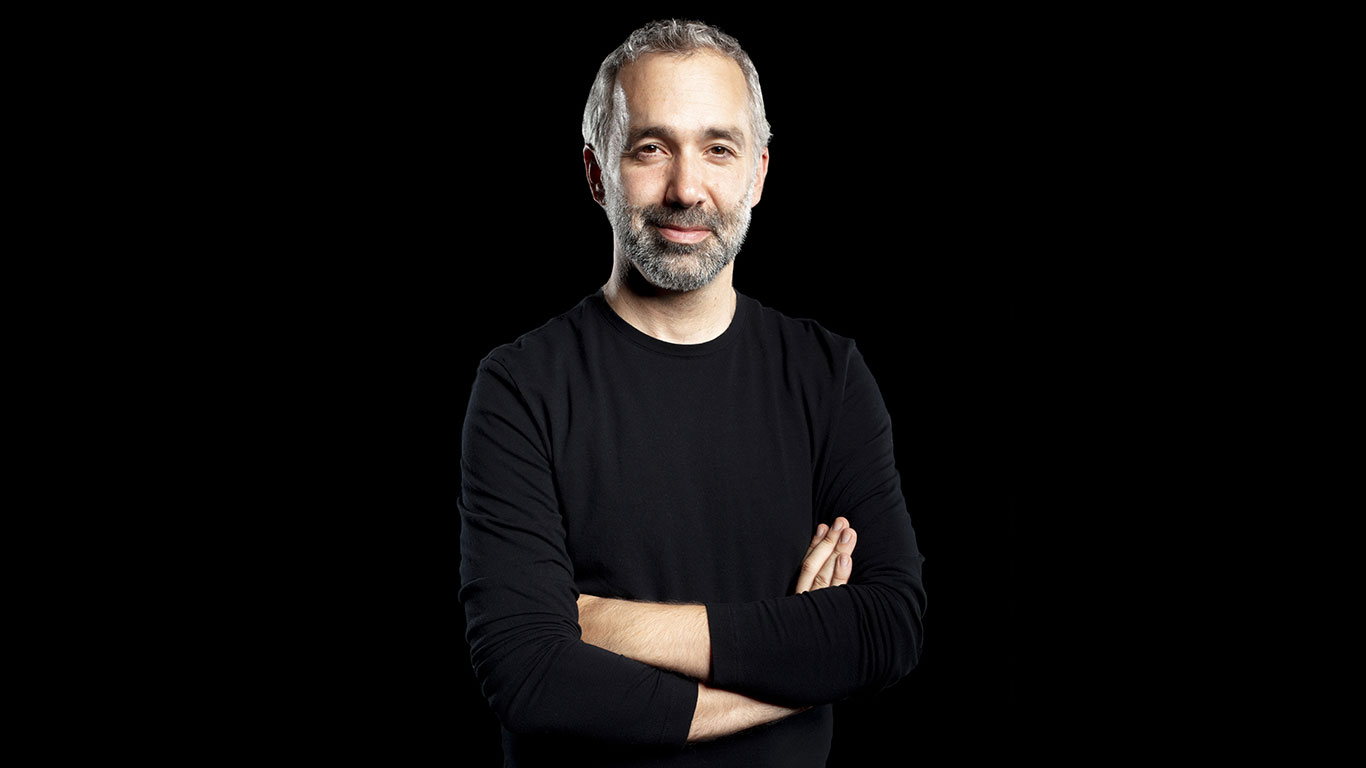
The only child born to Lebanese parents, Andrew Nemr is an artist and founder of the Nemr Institute® exploring individual and communal formation through the lens of creativity. Described as “A masterly tapper” by the New York Times, Andrew has journeyed through the worlds of commercial and cultural music, dance, theatre, film, and the visual arts. He is recorded on the Grammy nominated recording Itsbynne Reel by Dave Eggar, the topic of the award-winning documentary short film Identity: The Andrew Nemr Story by Windrider Studios, and the author of The Tap Dance Method: A Practical Exploration of Tap Dance Land. A TED Fellow, Andrew has given multiple talks on topics of identity, oral traditions, and love, and writes regularly on Substack. The creator of the Spiritual Formation for Artists Course in partnership with Forefront Festival, Andrew is captivated by the immense and diverse inner landscapes within each of us and has immense curiosity towards how we become who we are becoming.