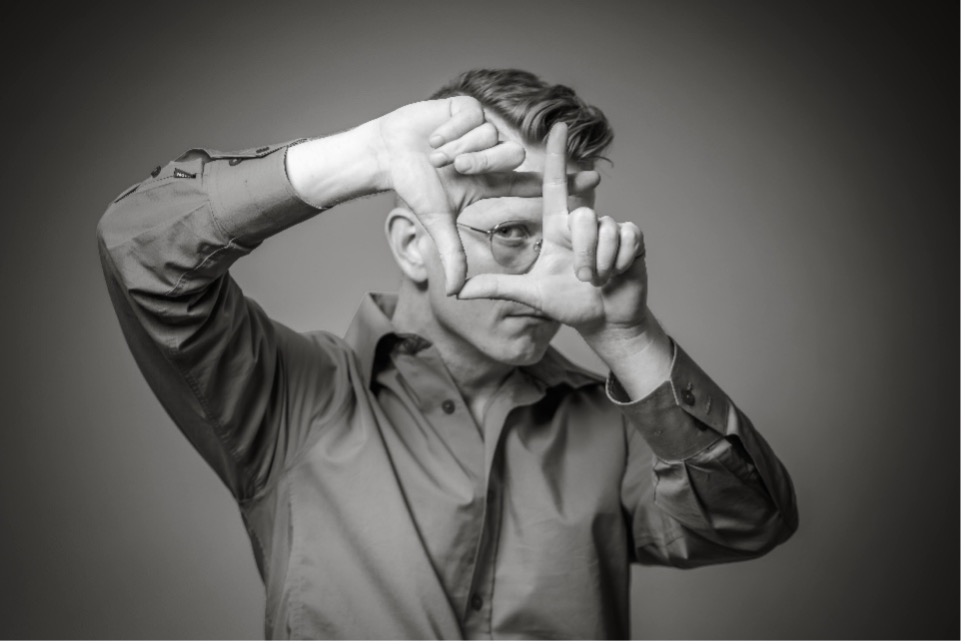
For over 25 years, I’ve lived inside the world of competitive dance.
On stage, on the microphone or behind the judging table. Backstage with teachers or in studios with dancers and directors. And more recently, in candid conversations with parents and industry leaders working to create safer, fairer spaces for young dancers with the tools available to them.
Dance may look different across genres or borders, but one thing is constant: it’s powerful. It builds confidence, discipline, identity, and belonging in ways few activities can. I’m proudly biased, because dance gave me purpose and I’ve seen it do the same for countless dancers, teachers, and families. It’s more than physical exercise or business; it’s a community, and people go to great lengths to support those they serve.
Alas, what I’m about to share hasn’t been easy to uncover, sit with, or write.
What We Don’t See
Over the past three years, my role in this industry has shifted. I stepped away from the things we all see at weekend performances: nerves, joy, energy, awards and the sparkle moments; and started looking closely at what we don’t: behind the figurative curtain, into the digital systems that power it all.
In doing so, I’ve come to understand how critical and overlooked the backend really is. A handful of SaaS (Software as a Service) providers power everything at any given dance competition from registration and scheduling to results, critiques, and photo/video capture, along with the post-event workflows that deliver and store dancers’ most cherished memories. Many events use proprietary systems, compounding the inconsistency in how studios manage and share data and images/videos of young dancers not wearing protective sport gear. Studios are left juggling a growing mix of platforms, each one working differently. The constant re-learning and data entry open the door to human error and worse.
This process revealed more than complexity; it surfaced uncomfortable realities, both through my own discovery and through stories confided in me by those who have lived them. Real accounts from parents, dancers, studio owners, and event professionals navigating systems that often don’t speak to each other and don’t meet the privacy standards demanded by today’s world.
A Shared Concern but Different Paths
During this research phase, I set off on a discovery and networking tour across North America. I attended every dance event my schedule allowed as either a fly on the wall, or a vendor/sponsor.
Meeting Mary Bawden and her DA:NCE Awareness team at the 2025 National Dance Educator’s Organization (NDEO) expo in Detroit, was a moment of alignment. Their work speaks to something urgent: how dancers are perceived, presented, and protected, particularly in a digital world where performance content can be misunderstood, misused, or taken out of context.
Their approach is rooted in education and leadership. Ours is rooted in systems, digital infrastructure, and identifying trustworthy guardians. Different paths, but the same responsibility. Whether we’re talking about choreography, costuming, or content distribution…the reality is the same: the digital environment surrounding dance has changed and our systems haven’t caught up.
This Isn’t About Fear, It’s About Awareness
Before we go further, it’s important to ground this in reality.
More than 300 million children annually, at a staggering rate of 10 cases every second, are victims of technology-facilitated sexual exploitation and abuse.1 The systems used to distribute performance media (the number one asset for online predators) or to remove harmful content are overwhelmed, and even after takedown efforts, content frequently resurfaces.
North America holds the world’s highest prevalence, with 23% of children impacted by the non-consensual creation, sharing, or exposure of sexual images and videos.1 Statistics Canada has documented a >180% increase in online sexual offences against children over the past decade, with girls aged 12–17, the core demographic of competitive dance, most affected.2 The Canadian Centre for Child Protection (C3P) reports over 100,000 cases of online child sexual exploitation every month. Cybertip.ca, Canada’s tipline for reporting child exploitation, processed nearly 4,000 sexually explicit deepfakes of children in the past year alone. Beyond school-related incidents, the C3P is seeing these images used for sextortion: targeting boys for money and girls for further sexual content.3
This cycle is even now being accelerated by deepfakes (AI-altered media that looks real but is entirely fabricated). Reports of generative AI used for child exploitation have surged from 6,835 in early 2024 to more than 440,000 in early 20254; a 60+% increase in one year highlighting a hidden pandemic growing faster than law enforcement can track. Researchers warn these harms now reach children in every classroom and every country, demanding that digital safety be treated as a global health emergency, while our industry continues to be driven by the search for that perfect photo or video highlight.
The actuality is, once something is online, control is virtually impossible to regain. This is not a dance-specific problem, but dance is uniquely vulnerable due to the nature of what it produces: an enormous volume of visual media featuring minors, widely distributed and often without verified access. Media which now exists online in ways it never has before, at the forefront of digital risk through livestreams, distribution, and social sharing. The repercussions are a risk we assume is rare until it happens to someone we know.
While the International Competitive Dancer Registry’s (ICDR) mission covers everything from fair-play standards to injury insurance, our first integrated usage is focused on this very specific, high-risk area: performance media. By solving the access problem first, we can show exactly how a verified danceID protects families in the most sensitive way possible.
The Stories We Don’t Tell
A Voice We Recognize, Speaking for Those We Don’t
Recently, on a historic ZOOM call featuring 100+ leaders from across the dance industry, a story was shared by someone many in this industry know: Sophia Lucia. Her platform may be global, but what she described is not rare and that’s exactly the point she made.
Sophia spoke about growing up in a time when “dance competitions didn’t have any verification to buy photos and videos… anyone could buy your photos and videos” she explained. What followed for her was not just a breach of privacy, but a sustained violation of personal safety where an adult man in his 60’s proceeded to stalk her as a 10-year-old competitor, buying photos of her at competitions, and then sending inappropriate photos to her home and studio; eventually getting the FBI involved. This dangerous circumstance was enabled by systems that never asked who was on the other side of the point of sale. For her, it was the media table but for today’s dancers there are still online galleries where the only thing preventing a stranger from accessing dancer media is a credit card or a date of birth as a password.
What makes her story particularly chilling is not just what happened—but what might not have happened.
“I keep thinking, if I wasn’t such a high-profile child… would anyone have caught that?”
We would be naïve to believe this only happens to high-profile dancers. In many ways, it’s easier now for it to happen unnoticed hidden behind screens, usernames, and systems that still allow the purchasing and distribution of images and videos without verified identity.
Sophia underscores the reality that the problem she experienced 13 years ago still exists today: the ability for individuals to access and purchase or access images or videos of young dancers without verification. In an era where content can be screen-recorded, reshared, and manipulated instantly, that access point becomes more than a convenience it becomes a vulnerability.
Her voice is not just a headline. It’s a bridge to the stories we don’t hear, from dancers who are still in their careers, still navigating these spaces, or who simply don’t feel safe putting their name to their experience.
So, here are a few stories that illustrate why this transition to verification in dance should no longer be optional. In line with my responsibility as Executive Director of the ICDR, the identities have been anonymized. For all those who said this is not a serious problem on my tour, please read carefully.
And as you read, keep in mind that ICDR has removed the biggest barrier to entry: cost. It’s free because we are determined to protect dancers and feel that safety shouldn’t be a privilege, but a right. Anyone can learn more about how to plug into our verified system of protections but more on that later.
Story 1: Information Map
“Maya” had just moved to a new studio to escape a troubling situation in her previous home city, related to an online stranger. It was supposed to be a fresh start. New studio, teammates and competitions. A new chapter in something she loved.
For a few weeks, everything felt normal. Then, the online messages started again. At first, they were easy to dismiss: a comment here, a vague message there. Nothing overtly alarming; just a bit off. But then they became specific: the stranger knew what competition she had just attended; referenced the date and location, and mentioned where she’d be performing next.
That’s when the feeling changed. There’d been no overt hack, just information pieced together: her name had appeared on a competition platform’s public list tied to media access; and discovered by the stranger who knew she was a dancer. That name connected her to the new studio, which posted content tied to the physical location in the real world for their upcoming event. Individually, each piece was harmless. Together, they became a map. Step by step, the stranger followed a trail that was never meant to exist and they approached the dancer in the parking lot of the competition.
Concerns escalated to the point where the family made the devastating decision to move cities again. Hoping for Maya’s safety, again.
Her story is ongoing, as she was found once more – through the same publicly available media redemption pathway; not because of something they did wrong, but because the current system makes it possible.
Story 2: The FBI/Trafficking Story
Perhaps the most sobering reality of our digital footprint is where these images can end up. Recently, federal authorities discovered photos of a competitive dancer, “Matthew,” on a trafficker’s computer during a larger investigation. The FBI needed to identify the competition and the family to determine if there was a direct connection or if the images had been harvested online. Because of the digital trail left by the media provider, the investigative team were able to identify the dancer and warn the family.
While we are grateful for the investigation, we have to ask: what have we learned or adjusted because of it?
Story 3: Celebration Becomes Exposure
“Ava”, who was in her final competitive season, had spent ten years at the same studio. The same hallways, the same teammates she grew up beside. This was an exciting but emotional season, dancing for the final time with the friends who helped shape her.
After the first event, the studio sent what everyone expected: a shared media folder. Without harmful intentions, hundreds of routines were passed around with one link. Parents, grandparents, family friends; even group chats were party to the celebration: a wonderful online shoebox of moments. Until it wasn’t.
Somewhere along the way, that link left its intended circle. A clip of Ava, caught mid-movement, completely out of context, was screen-recorded and distributed on SnapChat. Edited, shared and reposted. Used as a way to single her out by the dancers she had grown up with; not by strangers. To knock her down as revenge for being the only senior chosen to work with a guest choreographer known for winning; an opportunity coveted by every senior at the studio.
Within days, it spread through SnapChat; fast and impossible to pull back. What should have been a milestone season became something she wanted to disappear from.
The trauma of this exposure is not a temporary embarrassment; it is a long-term burden. A 2017 survey by the C3P found that nearly 70% of survivors live in constant fear of being recognized by someone who has seen their images, and 87% experience additional harm such as stalking or blackmail.5
For Ava, the system failed at the only place it could have stopped the cycle: the point of distribution.
Story 4: The Birthdate Problem
A well-known television cast attended a weekend dance event. They performed, and like every other dancer, attempted to access their media. Except, it was already gone. Claimed and downloaded by someone else.
In competitive dance, knowing a birthdate is often all it takes. Something publicly known and easily found. In some cases, there are even public lists linking names, birthdates to physical locations in the real world, their studios and, in some instances, even identifying their siblings and parents.
The risk extends beyond the screen into the very identity of the child. Minor identities are 51 times more likely to be used in identity theft than those of adults because the fraud often goes undetected for years.6 When we leave birthdates and names exposed in public lists, we aren’t just risking a photo; we are risking their financial and digital future.
“A child’s digital identity is formed before birth, when digital health records are created and families post online. A child’s online footprint can be set before they start to engage themselves, and follows them throughout their development and into adulthood. Protecting them from security breaches, identity theft, exploitation and bullying is more important today than ever, due to rapid and constantly emerging technical developments such as AI. We don’t send our children out in the street and encourage them to share all their personal details with strangers, nor wear a sign around their necks with their phone number and address, but this is exactly what happens online”, says Claire Quinn, Children & Teen Privacy Officer with ICDR.
ICDR has had one such dataset removed after discovering that it existed for some time. It didn’t just include dancers: it mapped families, siblings, parents, and relationships. All connected to young dancers whose vulnerability increased through our dance backend.
Story 5: Unclear Guardianship
In another case, access wasn’t taken by a stranger. It was requested by someone who knew “Alyssa’s” personal details.
A rightful guardian had control of the account. However, another adult in the child’s life, who should not have had access, attempted to retrieve the dancer’s media. Because current systems are knowledge-based security, like knowing a birthdate, a routine code or a date/location, the system could not distinguish between a legal guardian and an unauthorized individual.
There was no verified layer of identity to separate legal authority from personal knowledge.
This left the technology provider in an impossible position. The support desk worker was forced to make a high-stakes call on who should get access to a minor’s media.
By establishing a Verified Guardian link through the ICDR, we remove that burden. We replace a best guess with verified legal authority, ensuring the digital door is locked to everyone except the person who has been validated by a global safety standard.
The outcome was a dangerous uncertainty. In situations where boundaries exist for a reason, where access is a matter of safety -not just convenience- a best guess is a liability.
A Structural Problem, not an Artistic One
Dance has always debated art, costumes, themes, and choreography; but this is not that conversation. This is about systems and software that can add a level of control and assurance across dance as a whole.
It helps to understand what ICDR actually is. It’s not a media company, and it’s not an event registration platform. It’s a shared system, a single source of truth the industry can rely on, single verified IDs for dancers, that help connect everything while adding real privacy and media protections. We are not here to regulate creativity. We are here to answer something far more fundamental: Who has access to dancer media and family data? And, how is that verified? A studio director once told me:
“I trust my families. I trust my community. I just don’t trust where the content goes after it leaves us.”
Inside the studio, there is trust, accountability, and care. But once content leaves that environment, everything changes. We exist to solve a simple problem: we haven’t had a reliable way to verify who’s who. That gap has created confusion, risk, and extra work across the entire ecosystem. The ICDR was built to address that by providing dancers, families, studios, and events with a trusted and consistent foundation.
We’re starting where it matters most, by protecting young dancers. By linking media and personal information to a verified guardian, access becomes controlled and intentional. From there, it creates a stronger structure for everything else, from fair competition participation to future services that rely on accurate, trusted data.
The urgency for this verification is now backed by massive legal consequences. In 2022, the FTC issued a landmark $520 million settlement against Epic Games, including $275 million specifically for violating the Children’s Online Privacy Protection Act (COPPA).7 This sent a clear message to the industry: failing to verify parental consent and protect minor data is no longer just a technical gap; it is a significant legal liability.
Across North America, the volume is massive. Tens of millions of photos. Hundreds of thousands of videos. Every season. Behind each one: a dancer (often a minor). And yet, the systems managing this scale were never designed for identity-level protection.
This is Personal, Not Business
This work became personal for me long before it became professional. My sister is the President & CEO of the Canada Games Council, and for years, I’ve had a front-row seat to how athletes are supported at the highest level. Identity is verified, data is structured, and systems are built with accountability in mind.
There is clarity in sport.
And then, there’s dance. An equally demanding, equally expensive, equally formative activity for young people, yet without that same foundational infrastructure. That contrast stayed with me.
At first, it was just a question. Then it became a pattern. And eventually, after years of conversations, research, and listening to stories that were impossible to ignore, it became clear:
We don’t truly verify people in our ecosystem. And when identity isn’t verified, everything else starts to weaken. Access isn’t controlled, data isn’t protected, and trust, a cornerstone of this industry, becomes fragile in places we can’t see.
Interestingly, every role I’ve had in this industry has prepared me for this realization.
Being on stage taught me what dancers give. Being on the mic taught me how we celebrate them. Sitting at the judging table taught me how we evaluate them. Working with studios and events taught me how we organize it all.
But stepping away from all of that and looking at what happens before the curtain rises and after it falls, is what brought me here today to write this article. I only aim to bring awareness to the realities that plague lived experiences in our industry.
Are we all just waiting until it happens to us? How can we circumvent future issues and work towards a solution before circumstances force the conversation?
Building Trust, Together
That’s the gap ICDR is working to close. Not by replacing industry workflows but by strengthening them with verified IDs. Because this isn’t just about technology: it’s about clarity. Given our research, we now know that most collective pain points around media, fairness, and respect for what we do, stem from a lack of verified identity in dance. Verification brings clarification.
Clarity around who has access and who consents to data sharing. Clarity for a user on when and how to delete that data when they so choose. Clarity around how dancers are protected in a digital world that is moving faster than any of us anticipated.
Over the last year, investigative reporting has pulled back the curtain on deep-seated issues of leadership and accountability in dance. The industry is at a crossroads. Advocacy groups like DA:NCE Awareness are doing the vital work of pushing for cultural change, but that change must be met with technical infrastructure. We can’t just promise to be safer; we have to build the literal locks on the digital doors. ICDR is the practical, athlete-grade answer to the calls for accountability we are hearing from every corner of the community.
“Today, there are privacy and safety regulatory requirements that compel organisations to put in place privacy protections. Implementing valid consent, age and identity verification for younger children and teens is mandatory. By introducing a one-stop secure privacy solution, where parents and dancers only share data once, and seeking transparent consent, ICDR is helping build a safer ecosystem for dancers and industry”, says Quinn.
Trust is built the same way dance always has, together. Through conversation, challenges and a shared understanding. That’s why ICDR is being built alongside studios, partners, and families; and alongside organizations like DA:NCE Awareness.
An Open Invitation
This is not a closed conversation. If you’re reading this, you’re already part of it.
The future of dance won’t be shaped by one organization, one platform, or one voice, but by the people who care enough to ask better questions and expect better systems. We are listening. We are building to solve today’s challenges and to modernize our foundation for tomorrow. A system that reflects the level of care, professionalism, and responsibility that extends into the digital world.
This journey belongs to all of us and we are in your corner: a support line listening to every stakeholder. We’ve spent years hearing the stories that led us here, and we invite you to share yours. What is the first step we can take together to support your dancers and give your families peace of mind?
As of April 29, 2026, verifying and maintaining an ICDR danceID is completely free. The announcement was made publicly on the Industry Alarm ZOOM with 100+ leaders on the call. A conversation marked by progress, transparency and care; the participants were pleased to hear that ICDR’s first layer of protection is no longer inaccessible; the baseline fee gone.
Every dancer can now get and keep a danceID for free.
No fees for the 2026–2027 season.
No fees for 2027–2028.
No looming subscription to access baseline safety.
Because safety is not a privilege. It’s a right.
By removing the barrier to entry, the conversation shifts. It’s no longer “are you verified?”—it becomes:
Who or what are you verifying for?
In a digital environment where identity is the only true control point, that distinction changes everything. We are listening to the people we serve and it’s important we do this right. Safety is a right, and this is a new tool for leaders and studios that are already doing amazing work with the tools they have.
The toolbox of needs has shifted, and we’re here to respond.
Final Thought
For more than 25 years, I’ve watched dancers step onto stages and give everything they have, while trusting the process and the people around them. They trust that they are safe, and deserve the same after they leave the stage. That’s the promise we need to keep.
If all paths I’ve walked in this industry led me to this moment, this challenge, and this shared mission; then I believe we’re exactly where we’re supposed to be. If we get this right, together, we don’t just protect dancers, we elevate the entire industry. Ensuring every dancer is seen, respected, and protected: that’s the dream I see coming to life, and I am thankful for everyone who shares this vision.
1Childlight – Global Child Safety Institute. (2024) Into the Light Index on Child Sexual Exploitation and Abuse Globally: 2024 Report. Edinburgh: Childlight.
2Savage, Laura. (2026, March 10) Juristat Article — Online child sexual exploitation: A statistical profile of police-reported incidents in Canada, 2024. Statistics Canada.
3Canadian Centre for Child Protection (C3P). (2024, June 18). Police and child protection agency say parents need to know about sexually explicit AI deepfakes. protectchildren.ca. https://www.protectchildren.ca/en/press-and-media/news-releases/2024/AI-deepfakes
4National Center for Missing & Exploited Children & Davis, P. (2025, September 4). Spike in online crimes against children a “wake-up call”. MissingKids.org. https://www.missingkids.org/blog/2025/spike-in-online-crimes-against-children-a-wake-up-call
5Canadian Centre for Child Protection Inc. (C3P) (2017). Survivor’s Survey. Full Report 2017. protectchildren.ca
6Richard Power, Distinguished Fellow CyLab. (2011) Child Identity Theft. Carnegie Mellon University.
7Federal Trade Commission. (2022, December 19). Fortnite Video Game Maker Epic Games to Pay More Than Half a Billion Dollars over FTC Allegations of Privacy Violations and Unwanted Charges. ftc.gov. https://www.ftc.gov/news-events/news/press-releases/2022/12/fortnite-video-game-maker-epic-games-pay-mor e-half-billion-dollars-over-ftc-allegations
Bio: Jamie Hodgins is a celebrated force in the competitive dance world, bringing over two decades of experience as a performer, choreographer, adjudicator, competition director, casting agent and producer to his role as Executive Director of the International Competitive Dancer Registry (ICDR). From dancing alongside global icons like Madonna, Ariana Grande, Nick Jonas, and Demi Lovato to producing groundbreaking events and virtual productions, Jamie’s career has been defined by artistic excellence and a relentless drive to improve the industry he loves and calls home. As a performer, Jamie’s credits include Disney’s CAMP ROCK 2, Broadway’s last professional tour edition of HAIRSPRAY with George Wendt, and leading roles in award-winning films like History Television’s Death or Canada. He has worked with luminaries such as Marvin Hamlisch, Chita Rivera, and Sean Cheesman, building a repertoire that spans hip-hop, ballet, contemporary, and musical theatre. Behind the scenes, Jamie has directed productions for the Toronto Symphony Orchestra, the National Ballet of Canada, and RuPaul’s All Stars winner Jimbo, among others. Jamie’s leadership in the ICDR reflects his commitment to safeguarding dancers and reshaping the competitive landscape. Inspired by the structure and protections seen in youth sports, he has helped pioneer a secure, centralized system to protect dancer media, verify identities, and create a lasting record of achievements. His mission is to unite studios and competitions under a shared vision of fairness, transparency, and opportunity, ensuring that dancers and their families feel supported and safe at every step of their journey. Whether working with global stars or the next generation of talent, Jamie Hodgins is an innovator dedicated to giving back to the dance community by building an industry that prioritizes artistry, integrity, and safety. His expertise, combined with a passion for collaboration and change, cements his legacy as a disruptor bringing positive transformation to the arenas and stages dancers call home. International Competitive Dancer Registry