The beliefs, mission, and values behind DA:NCE are rooted in what many of us would consider foundational and common sense—respect, care, and a genuine commitment to the well-being of young dancers. At its heart, dance education should feel safe, supportive, and inspiring; a place where young people feel seen, and encouraged as they grow. These are the qualities educators strive to offer, and families trust they will receive. Sadly, that isn’t always the standard everywhere.
I grew up dancing in competitive studios and at a non-competitive ballet school from the ages of 3 to 16. At 14, I was told my hips were “too big”. I look back at this now and realize this began the issues with body dysmorphia that plague me to this day. There is no single body type that defines a dancer. One size does not fit all in an art form built on expression, individuality, and strength—phenomenal dancers come in every shape, height, and background. When we dismiss or discourage an adolescent because they don’t fit a perceived physical ideal, we risk doing lasting harm—not only to their confidence, but to their sense of worth. Technique can be developed. Artistry can be nurtured. But the impact of being told your body is “wrong” can linger for years.
At 16, I began to recognize the unhealthy practices that came with competition. The mind games and pettiness that existed between dancers, just because they attended different dance schools, became a platform for bullying—notes in lockers, snickering in hallways, and escalating rivalries. After witnessing an explosive backstage fight between rival dancers, I decided it was time for a change.
When I think back, it wasn’t even a difficult decision. I knew that dance would always be a part of my life, and it never felt like quitting; I just needed to find a different place to continue to grow and find the joy of dance again. I found a group based out of the university and remember walking into my first class. No one cared about appearances—they were simply there to dance. For the first time in my dance journey, I realized what it meant to just dance.
The lesson that took a lot longer to figure out was the normalizing of chronic soreness and overuse injuries. It was common practice to “push through” pain on a daily basis. I can’t remember a single day I have ever woken up and said, “Hey, my body feels great today!” At 16, I might have left the harmful social space of dance, but I continued to live in the world of “no pain, no gain,” and because I had grown up with this as an expectation in my dance classes, it was a pattern that I never questioned.
I can’t count the number of times I competed on sprains, tears, not yet healed fractures, torn labrums, pinched nerves, compressed discs, concussions etc. I am sure we have all been there, but why does that make it ok? As teachers and mentors, we are given the enormous responsibility of guiding and advocating for our students’ long-term health over short-term success. That means normalizing rest, encouraging honest communication, and creating an environment where a dancer never feels weak for speaking up. It means valuing sustainable training over medals, and understanding that protecting a young body and mind is far more important than any trophy.
As my training continued, I moved into the world of Ballroom Dance—where I met my husband and lifelong dance partner, and into Irish Dance, where I have made lifelong friends, including my current business partner. I earned my Bachelor of Education degree. I found ways to integrate dance into various subjects and schoolwide events, allowing students to learn through movement. I witnessed firsthand how dance builds confidence in the quiet child, focus in the restless one, and connection among students who might otherwise never cross paths. Movement became a language of belonging. It was never just about choreography; it was about cultivating the courage, creativity, and community. That experience solidified what I had always believed—dance is not an extracurricular luxury; it is a powerful educational tool, a bridge between disciplines, and a space where every child can discover their voice.
When my eldest daughter was born, eager to share my love of dance with my baby girl, I put her in dance lessons. I watched a teacher literally push her out onto the stage, crying. My heart broke. There was no joy, no nurturing teacher encouraging her. I left my seat in the audience, lifted her off the stage, we left the theatre, and that was the day I vowed to do things better, to create a place for children to dance where their well-being would always be at the forefront of all decision-making.
In 2016, I joined forces with my current business partner, Jenna Brenan, also an elementary teacher, and together we have continued to build a space rooted in education, integrity, and joy. We both had the privilege of attending the Summer Dance Institute for Teachers with Anne Green Gilbert at the Creative Dance Center in Seattle, where we learned more about Brain-Compatible Dance Education. Anne is a wealth of knowledge and so generous in sharing her research and pedagogy with others. Her work profoundly influenced our studio’s foundation, emphasizing developmentally appropriate practices, creativity, and cognitive engagement in dance education.
As an educator and parent, I am horrified by what comes across my social media feed: groups of children in sexually provocative outfits portraying characters and themes they are too young to understand. I am proud to say that J’Adore Dance opens its doors to roughly 1000 students every week. Each one walks in with a different story, a different body, a different dream—and we believe every one of them is enough exactly as they are. Our philosophy has never been about changing children to fit dance; it has been about allowing dance to meet children where they are. We have a no-stage make-up policy; our costuming, music, and choreography have always been, and will always remain, family-friendly and age-appropriate. Childhood is not something to rush through or commercialize. It is something to protect.
At J’Adore Dance, excellence is measured by growth, integrity, and teamwork—not by appearance. We celebrate artistry without sacrificing innocence. We prioritize healthy training practices, positive mentorship, and an environment where dancers feel safe, supported, and valued beyond their technique. Our instructors are mentors, role models, and advocates for safe, developmentally appropriate, and healthy dance education. When families entrust us with their children, we understand that we are being entrusted with far more than dance education; we are being entrusted with their confidence, their well-being, and their sense of self.
As educators, we believe in giving every child the opportunity to dance. Our programs at J’Adore are fully inclusive. We have dancers of all ages and abilities in our classes, including children who are neurodivergent, who have physical or developmental limitations, who experience severe anxiety, and those who simply need additional support to feel successful in a group setting. Our inclusion is intentional, with meaningful supports in place to help children thrive, not just participate. Our classes are structured with clear routines and expectations, and our faculty engages in ongoing education around child development and nervous system regulation so we can respond thoughtfully to individual needs. Inclusion does not lower standards; it raises our responsibility as educators to ensure that each dancer has what they need to flourish.
We know our studio is vastly different from many others in our area, and at times that difference has required courage. When we came across YPAD and DA:NCE, we felt an immediate sense of alignment, finding organizations articulating the same priorities that we had built our studio on. Choosing to do things differently is not always the easiest path. It requires reflection, humility, and the willingness to challenge long-accepted norms—valuing long-term wellness over short-term accolades, character over appearance, and belonging over exclusivity. That work can be uncomfortable. It can require courage. But when the well-being of children is the foundation of every decision we make, the effort is not only worth it—it is non-negotiable. Because the environments we create today will shape how they see themselves for years to come, and that responsibility is far greater than any trophy, title, or tradition.
Together, we can change the culture of dance by demanding practices that protect the innocence of our children. As parents, teachers and studio owners, we need to ask questions:
- What does ‘age-appropriate’ mean to you in a competitive dance environment?
- How do you define healthy artistic expression for children?
- What message do you think dance educators send — intentionally or unintentionally — through costume and music choices?
- In your opinion, where is the line between artistic freedom and adultification of children?
- How do you vet music before using it in class or choreography?
- What are your thoughts on using music that centers on themes of sexuality, revenge, or adult relationships for young dancers?
- How do you ensure that dancers of all body types feel equally comfortable and celebrated in costume?
- How do you balance creating competitive, engaging choreography while still protecting the innocence of young dancers?
Everyone needs their happy place. One of my mentors used to say that the school was her beach. For us, that place is our studio, where children are allowed to be children. It is a place where laughter fills the lobby, friendships form at the barre, and young dancers grow in skill, confidence and self-worth.
Click here to learn more about Brain Compatible Dance Education through the Summer Dance Institute for Teachers at the Creative Dance Center with Anne Green Gilbert this summer.
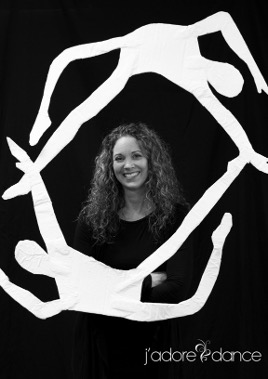
Bio: Chantel Sampson, BEd, is the Co-Owner and Artistic Director of J’Adore Dance in Edmonton, Alberta, Canada. She is mom to three amazing young adults who, while each following their own education and career paths, continue to be involved in the J’Adore Dance business. Chantel met her husband 30 years ago on the ballroom dance floor, and they continue to waltz and cha cha through life. When not dancing, Chantel enjoys spending time with her family, skiing, hiking or relaxing at the lake.
Chantel holds additional certifications in
- Certificate in Performing Arts Healthcare through the American College of Sports Medicine
- Yamuna Body Rolling
- AFLCA with Portable Equipment
- First Aid and CPR-C
- Pre and Post Natal Fitness
- Infant Massage Instructor Certification from Trimesters Massage.
Additionally, she is a member of Dance Safe Canada, Healthy Dancer Canada, Canadian Dance Teachers’ Association, Alberta Dance Educators’ Association and is a new member of the Advisory Council of DA:NCE.